
Tube chassis question
Page 1 of 2 • 1, 2 
Tube chassis question
Shawn Sexton May 25th 2010, 11:11 am
Just don't want to get into the situation where I "Cut it twice and it's still too short"
I see all kinds of obtuse angle in the tubing and how do you go about detemining this?
I probably opened a can of worms now!

Shawn Sexton- Posts : 52
Join date : 2009-10-07
Age : 64
Re: Tube chassis question
whatbumper May 25th 2010, 11:50 am

whatbumper- Posts : 3024
Join date : 2009-11-11
Age : 43
Re: Tube chassis question
DILLIGASDAVE May 25th 2010, 5:47 pm
I never have liked any of the holesaw notchers because they do have a limit on the max angle you can notch. I just notch/fish mouth tubing the old school way, 14" chop saw to rough cut the notch, 8" bench grinder to finish the notch, belt sander to smooth any sharp edges & put a decent 45* edge for heat penetration on thicker wall tubing. Other tools I use associated with fitting a piece of tubing are an orbital sander, sandpaper, & Scotchbrite to remove any outer surface scale at the weld joint. And of course a drill & 1/16" bit to drill at least one pressure relief hole in each section of tubing.
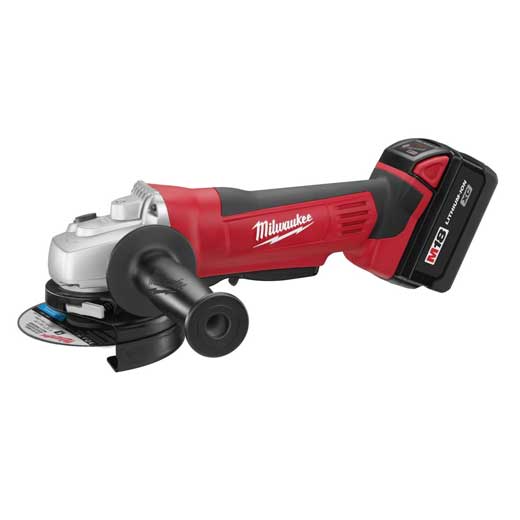
As for using cordless tools in the shop, I gave up on them long ago. Too much of a hassle trying to keep at least one battery charged in reserve. And when a battery takes a siht, the replacement batteries cost too much. Cordless tools are fine for keeping in the trailer's tool box & use at the track. But they suck for every day repeated heavy shop use.

DILLIGASDAVE- Posts : 2262
Join date : 2009-08-08
Location : Texas. pronounced "texASS"
Re: Tube chassis question
cool40 May 25th 2010, 10:19 pm
 have you saw the vid on yellow bullet of the guy notching with a chop saw? he's almost too good.

cool40- BBF CONTRIBUTOR

- Posts : 7308
Join date : 2009-08-31
Age : 53
Location : on the 1/8 mile dyno
Re: Tube chassis question
jones May 25th 2010, 10:56 pm
whatbumper you must be crazy quick, patient or just down right good to do that work with rechargeable tools!!
jones- Posts : 2230
Join date : 2008-12-02
Location : Philadelphia, MS.
Re: Tube chassis question
whatbumper May 25th 2010, 11:58 pm
jones wrote:I agree!!!
whatbumper you must be crazy quick, patient or just down right good to do that work with rechargeable tools!!
Milwaukee tools are the best I have found.(A set of power tools came with a new Chevy pickup that my uncle bought) I got tired of tripping over the damn cords all the time. As long as you keep an extra battery on the charger it is not that bad. We've built a couple 25.5 fox mustangs this way and each time it gets easier. I don't work by myself. One cuts and notches with the tubing notcher and the the other finishes the notches with the grinder.
I do have a cord on my chop saw though.

This is NOT a perfect system. The other person is my brother and we exchange our share of curse words but I wouldn't want to work with anyone else. His vision and ability to problem solve are second to none. He has to being a full-time farmer that takes care of over ten thousand acres in a thress man operation.
whatbumper- Posts : 3024
Join date : 2009-11-11
Age : 43
Re: Tube chassis question
richter69 May 26th 2010, 12:27 am
2 weeks later I sent the damn thing back in..................sure missed it lol.
I have a notcher made by protools, made a fixture to put it in my drill press..............that tool along with a plasma cutter are worth their weight in gold.

richter69- Posts : 13649
Join date : 2008-12-02
Age : 53
Location : In the winners circle
thanks for the input
Shawn Sexton May 26th 2010, 6:31 am
Future plans are to get a tubing bender, but not sure what shoes to get. I know I'll need one for the 1 5/8 tubing , but not sure what radius bend is best. Any other sizes to get as a suggestion?
I did find this site for using a tubing bender and how to bend tubing
http://www.therangerstation.com/tech_library/pdf_documents/bendinginstructions.pdf
I like the idea of using the digital angle finder that sure sounds like it makes the job faster and precise.
I have a drill press w/tilt table/degree pointer, but need some ideas for a tubing fixture on the table.
Looks like there's going to be a lot more research before I can get started.
Ultimately, I think I'll wind up just cutting everthing out and starting over with a round tube, modern design chassis.
Get ready to spend the $$!!
Shawn Sexton- Posts : 52
Join date : 2009-10-07
Age : 64
Re: Tube chassis question
jones May 26th 2010, 9:07 am
jones- Posts : 2230
Join date : 2008-12-02
Location : Philadelphia, MS.
Re: Tube chassis question
Shawn Sexton May 26th 2010, 9:26 am
jones wrote:Nothing wrong with stick welding as long as you know how to weld! I know a lot of welders that can lay down a stronger, prettier weld with a cracker jack box than the best mig.
I agree, the guy that welded my chassis back then was a talented buzzbox welder. I don't think stick welding will pass chassis cert though, is this correct?
I have an old craftsman Ac/DC welder that I bought at a garage sale for $50.00, but can't make a good weld with it, too much slag inclusion with a 7018, 6010, or 6011. Someone once told me the welder may have a bad rectifier, whio knows?
I like to think its the machine and not the operator!
Shawn Sexton- Posts : 52
Join date : 2009-10-07
Age : 64
Re: Tube chassis question
jones May 26th 2010, 9:32 am
I think it has more to do with the operator than the machine. I could be wrong, I'm not 100% on SFI, NHRA and IHRA spec's.
Edit: I am probably wrong so just ignore me. The small size of chassis tubing might be hard to control heat in.
jones- Posts : 2230
Join date : 2008-12-02
Location : Philadelphia, MS.
Re: Tube chassis question
the Coug May 26th 2010, 10:07 am
Dave will respond when he see's this I am sure....
Randy

the Coug- Posts : 3055
Join date : 2008-12-02
Re: Tube chassis question
Northwest outlaw May 26th 2010, 10:21 am
the Coug wrote:Josh I think I remember the rule book saying you can use a mig or tig no stick....
Dave will respond when he see's this I am sure....
Randy
Thats is right Randy mig/tig only It has to do with a few things heat in the tube and contaminates in the weld pubdle.

Northwest outlaw- Posts : 962
Join date : 2009-06-27
Age : 48
Location : Pinehurst Idaho
Re: Tube chassis question
whatbumper May 26th 2010, 11:25 am
whatbumper- Posts : 3024
Join date : 2009-11-11
Age : 43
Re: Tube chassis question
DILLIGASDAVE May 26th 2010, 6:38 pm
One mistake that some people make when fitting mild steel tubing for Mig welding is they actually fit the joint too tight (especially the .134" wall stuff) making it much harder to get the proper weld heat penetration with the Mig. An ultra super tight fitting weld joint is really only necessary when Tig welding .058" or .065" wall 'moly tubing. The .083" wall 'moly is also fit on the tight side, but with a slight 45* chamfer on the edge. With the .134" wall ms stuff & Mig welding you either fit the tubes touching each other at the joint, but with a decent sized 45* chamfered edge. Or you don't use any chamfer on the edge, but leave an air gap at the joint.
Proper tack weld placement also plays a part in Mig welding penetration & effects the weld joint strength. Before you grab the Mig & go crazy tack welding a fitted joint, look at the joint for a second. Figure out ahead of time how many start/stop passes it will take to go all the way around the tube & which direction each start/stop pass will go. Since Mig welding is so damn cold at the start of the pass, the idea is to place a tack weld where the weld pass will end/finish....and never (if possible) at the start of a pass. This helps "burn" the tack into the puddle because everything is up to full temp by the end of the pass. Starting a weld pass right on top of a tack weld further increases the chance of a "cold" puddle start & less weld heat penetration.
The same weld pass starting/stopping placement idea applies to beginning a new Mig weld pass in reference to previous weld passes. You want to end a new pass stopping at/on an older pass. But (again if possible) you try to avoid starting a new pass at/on an older pass (the "cold" start thinking again).
Tack welds are also a great "oops" fixer if you happen fit part of a weld joint way too loose leaving a gap too big in the weld joint. Just place a tack or two "in" the weld joint gap (vs "on" the weld joint). The tack(s) in the too loose joint will act as extra filler material & cool the weld puddle slightly as you pass over it helping to avoid a burn through.
DILLIGASDAVE- Posts : 2262
Join date : 2009-08-08
Location : Texas. pronounced "texASS"
Re: Tube chassis question
Shawn Sexton May 27th 2010, 9:05 am
http://www.sheldonbrown.com/rinard/framebuild.htm
Scroll down to software and look at Tubemiter.exe, this is an easy to use program for free, you can print out a paper pattern to overlay on the tubig for cuts.
thought this was a great keeper!
Shawn Sexton- Posts : 52
Join date : 2009-10-07
Age : 64
Re: Tube chassis question
DILLIGASDAVE May 27th 2010, 8:35 pm
Shawn Sexton wrote:I did find this site for using a tubing bender and how to bend tubing
http://www.therangerstation.com/tech_library/pdf_documents/bendinginstructions.pdf
Man that Pro Tools bender is almost an exact rip off of the JD Squared equipment. Even the Pro Tools PDF drawings look like they just copy/pasted JD2's info. Maybe they are actually the same company these days.....stranger things have happened.
A few years ago when I bought a new die/shoe size for my bender the JD2 salesman was telling me how an "unnamed company" had been trying to copy the JD2 design for a while, but they just couldn't get it exactly the same. The "copy-cat" company kept missing an important little angle change on the shoe that JD2 discovered helped make the bend form a lot smoother with less wall collapse on the outside of the bend.
DILLIGASDAVE- Posts : 2262
Join date : 2009-08-08
Location : Texas. pronounced "texASS"
Re: Tube chassis question
Northwest outlaw May 28th 2010, 1:33 am
Northwest outlaw- Posts : 962
Join date : 2009-06-27
Age : 48
Location : Pinehurst Idaho
Re: Tube chassis question
'65 T-BOLT May 28th 2010, 4:22 pm

'65 T-BOLT- Posts : 1464
Join date : 2009-08-28
Age : 53
Location : Hagerstown,Maryland
Re: Tube chassis question
DILLIGASDAVE May 28th 2010, 4:56 pm
Only things I don't like about the Speedway design is the die is made of aluminum. And they use a single roller wheel as the "shoe" to support the outer tube wall during bending vs a longer two surface slider shoe JD2 uses.
If I remember correctly my 1-5/8" die has a 6.5" radius, but i could be wrong. I don't remember the radius of the other dies, I would have too look. However the radius of the 1" die (whatever it is) is the perfect size for making 180* driveshaft loops. If your Speedway bender does have a rather large radius it's not really a bad thing. A large bending radius spreads the load over a larger area & is probably how they are able to use aluminum for the die.
DILLIGASDAVE- Posts : 2262
Join date : 2009-08-08
Location : Texas. pronounced "texASS"
Re: Tube chassis question
'65 T-BOLT May 30th 2010, 1:46 am
'65 T-BOLT- Posts : 1464
Join date : 2009-08-28
Age : 53
Location : Hagerstown,Maryland
Re: Tube chassis question
Shawn Sexton June 4th 2010, 10:18 am
JD has 6.5 and 5.5 radius shoes.
Hummm.... More research
Shawn Sexton- Posts : 52
Join date : 2009-10-07
Age : 64
Re: Tube chassis question
'65 T-BOLT June 4th 2010, 3:52 pm
'65 T-BOLT- Posts : 1464
Join date : 2009-08-28
Age : 53
Location : Hagerstown,Maryland
Re: Tube chassis question
Shawn Sexton June 5th 2010, 5:08 pm
Now, 5.5 radius or 6.5 radius 90 degree shoe for 1 5/8" tubing? or is a 180 degree shoe the way to go?
Shawn Sexton- Posts : 52
Join date : 2009-10-07
Age : 64
Re: Tube chassis question
Dave Maxwell June 5th 2010, 6:02 pm
Dave Maxwell- Posts : 576
Join date : 2009-08-13
Age : 54
Location : Kickapoo Il.
Page 1 of 2 • 1, 2
Similar topics» tube chassis ?
» Tube Chassis C-460 Headers
» 57 T Bird Tube Chassis Car
» 89 tube chassis foxbody
|
|
|